As the packaging industry places increasing emphasis on product performance, visual design, and environmental responsibility, technologies related to packaging webbing are continuing to advance. As an important packaging accessory, webbing must provide essential functions such as support and fastening while also delivering durability, aesthetic appeal, and sustainability. Recent developments in textile technology, intelligent manufacturing, and new materials are helping manufacturers create higher-quality and more versatile packaging webbing products.
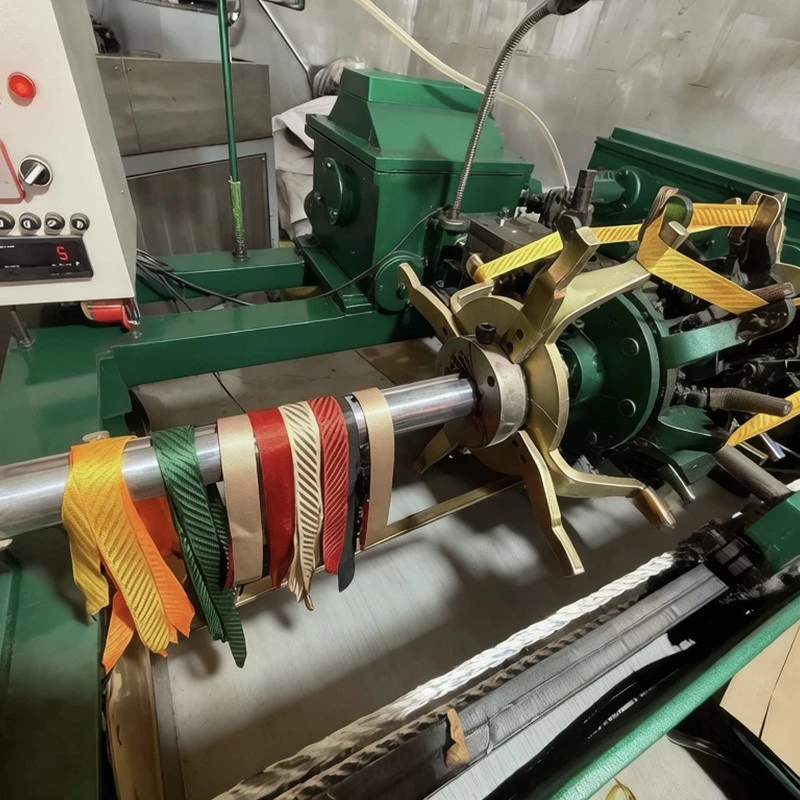
One of the key areas of packaging webbing technology is weaving technology. Advanced high-speed weaving machines allow warp and weft yarns to be arranged and interlaced with greater precision, creating webbing with stable structures and consistent appearance. During production, manufacturers carefully control yarn tension, weaving density, and webbing thickness to ensure excellent tensile strength, abrasion resistance, and dimensional stability. These refined manufacturing techniques improve product quality and enhance performance across different application environments.
Dyeing and printing technologies are also essential parts of packaging webbing production. Modern manufacturers use environmentally responsible dyeing processes and digital printing technologies to achieve richer colors and customized designs. Based on customer requirements, webbing can include different colors, patterns, and brand logos, allowing it to serve both functional and decorative purposes. The use of eco-friendly dyes also helps reduce environmental impact and supports the development of sustainable packaging solutions.
Material technology is another important factor in the advancement of packaging webbing. Common materials include polyester, nylon, cotton fiber, polypropylene, and recycled fibers. Through technological improvements, each material can be optimized for specific applications. Polyester webbing provides high strength and excellent abrasion resistance for commercial packaging needs. Cotton webbing offers a soft, natural texture suitable for premium and environmentally friendly packaging. Recycled fiber webbing helps reduce resource consumption and supports sustainable manufacturing practices.
With the growth of intelligent manufacturing, automated production equipment and quality inspection systems are becoming increasingly common in packaging webbing production. Smart equipment can monitor production conditions in real time, improve consistency, and reduce manufacturing errors. In addition, tensile testing, dimensional inspection, and visual quality control technologies further ensure product reliability and performance.
Industry experts believe that future packaging webbing technologies will continue to develop toward greater intelligence, sustainability, and functionality. Through the adoption of advanced materials, optimized manufacturing processes, and digital production management, packaging webbing will play an increasingly important role in branded packaging, logistics, gift packaging, and other industries, providing more efficient, innovative, and sustainable solutions for the global packaging market.